Description
Brand: NOYITO
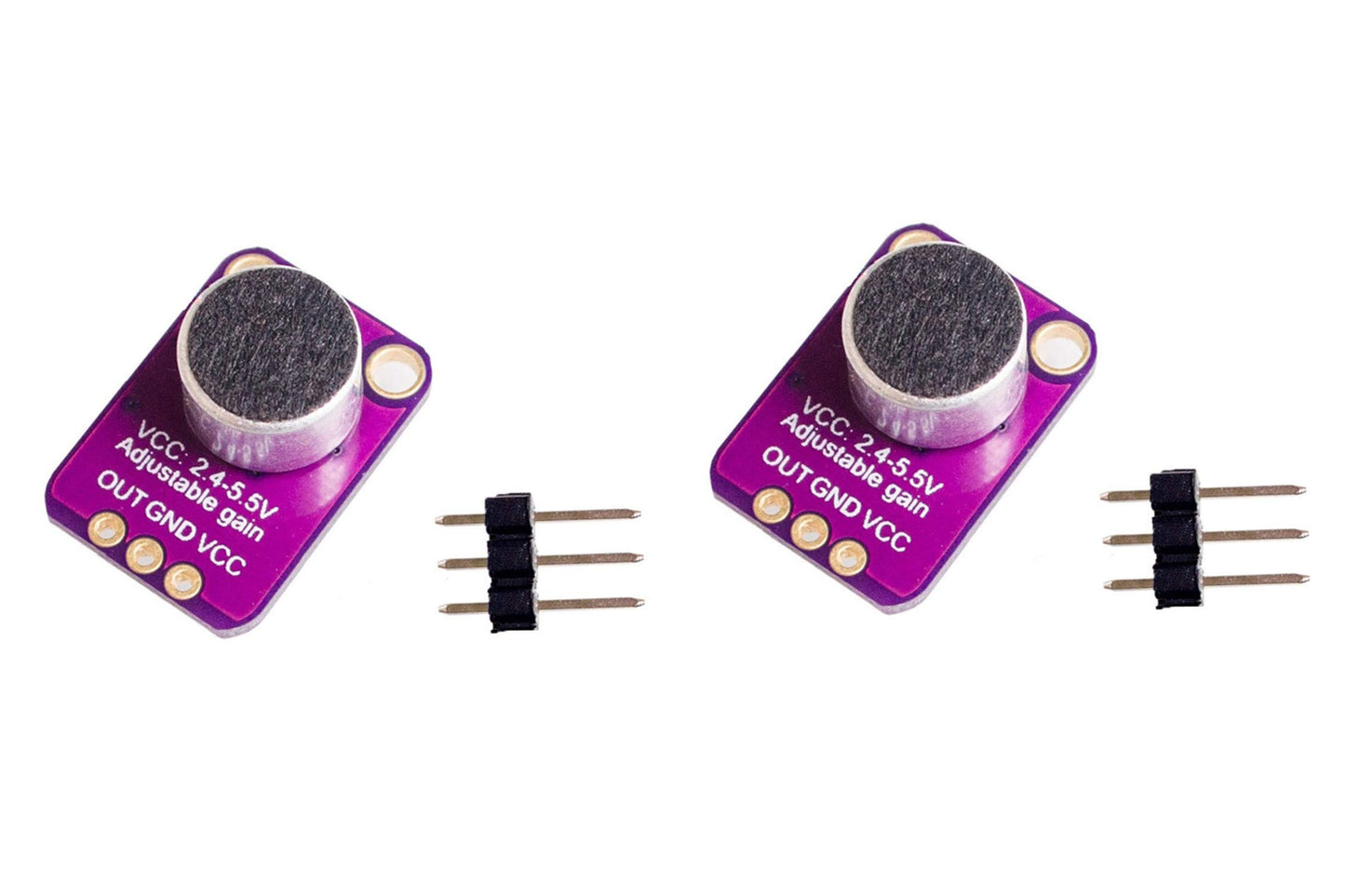
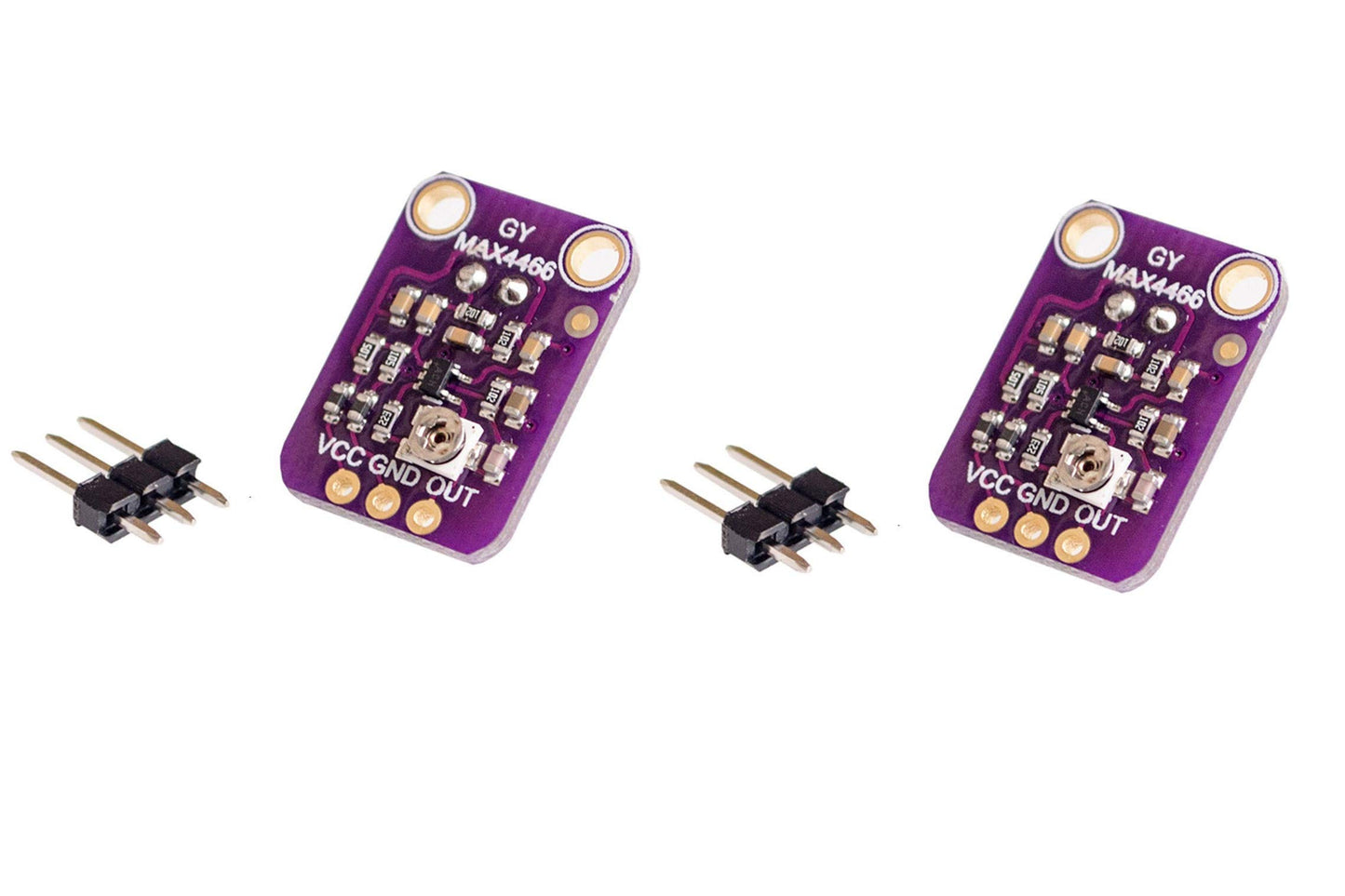
Description:<br> On the back, we include a small trimmer pot to adjust the gain.<br> The output is rail-to-rail so if the sounds gets loud, the output can go up to 5Vpp!<br> You can set the gain from 25x to 125x. That's down to be about 200mVpp (for normal speaking volume about 6" away) which is good for attaching to something that expects 'line level' input without clipping, or up to about 1Vpp, ideal for reading from a microcontroller ADC.<br> <br> Using introduction:<br> Connect GND to ground, VCC to 2.4-5VDC.<br> The audio waveform will come out of the OUT pin. The output will have a DC bias of VCC/2 so when its perfectly quiet, the voltage will be a steady VCC/2 volts (it is DC coupled).<br> If the audio equipment you're using requires AC coupled audio, place a 100uF capacitor between the output pin and the input of your device.<br> If you're connecting to an audio amplifier that has differential inputs or includes decoupling capacitors, the 100uF cap is not required.<br> The output pin is not designed to drive speakers or anything but the smallest in-ear headphones- you'll need an audio amplifier (such as 3.7W stereo amp)<br> If you want to connect the amp directly to speakers. If you're connecting to a microcontroller pin, you don't need an amplifier or decoupling capacitor - connect the OUT pin directly to the microcontroller ADC pin.<br> For audio-reactive projects, we suggest using an FFT driver library which can take the audio input and 'translate' it into frequencies.<br> <br> Package Included:<br> 2pcs NOYITO MAX4466 Electret Microphone Amplifier<br>
• Add an ear to your project with this well-designed electret microphone amplifier. This fully assembled and tested board comes with a 20-20KHz electret microphone soldered on.
• For the amplification, we use the MAX4466, an op-amp specifically designed for this delicate task! The amplifier has excellent power supply noise rejection, so this amplifier sounds really good and isn't nearly as noisy or scratchy as other mic amp breakouts we've tried!
• This breakout is best used for projects such as voice changers, audio recording/sampling, and audio-reactive projects that use FFT.
• On the back, we include a small trimmer pot to adjust the gain. You can set the gain from 25x to 125x. That's down to be about 200mVpp (for normal speaking volume about 6" away) which is good for attaching to something that expects 'line level' input without clipping, or up to about 1Vpp, ideal for reading from a microcontroller ADC. The output is rail-to-rail so if the sounds gets loud, the output can go up to 5Vpp!
• Connect GND to ground, VCC to 2.4-5VDC. For the best performance, use the "quietest" supply available (on an Arduino, this would be the 3.3V supply). The audio waveform will come out of the OUT pin. The output will have a DC bias of VCC/2 so when its perfectly quiet, the voltage will be a steady VCC/2 volts (it is DC coupled).
Model: NOMAX4466
Color: Purple
Description:<br> On the back, we include a small trimmer pot to adjust the gain.<br> The output is rail-to-rail so if the sounds gets loud, the output can go up to 5Vpp!<br> You can set the gain from 25x to 125x. That's down to be about 200mVpp (for normal speaking volume about 6" away) which is good for attaching to something that expects 'line level' input without clipping, or up to about 1Vpp, ideal for reading from a microcontroller ADC.<br> <br> Using introduction:<br> Connect GND to ground, VCC to 2.4-5VDC.<br> The audio waveform will come out of the OUT pin. The output will have a DC bias of VCC/2 so when its perfectly quiet, the voltage will be a steady VCC/2 volts (it is DC coupled).<br> If the audio equipment you're using requires AC coupled audio, place a 100uF capacitor between the output pin and the input of your device.<br> If you're connecting to an audio amplifier that has differential inputs or includes decoupling capacitors, the 100uF cap is not required.<br> The output pin is not designed to drive speakers or anything but the smallest in-ear headphones- you'll need an audio amplifier (such as 3.7W stereo amp)<br> If you want to connect the amp directly to speakers. If you're connecting to a microcontroller pin, you don't need an amplifier or decoupling capacitor - connect the OUT pin directly to the microcontroller ADC pin.<br> For audio-reactive projects, we suggest using an FFT driver library which can take the audio input and 'translate' it into frequencies.<br> <br> Package Included:<br> 2pcs NOYITO MAX4466 Electret Microphone Amplifier<br>
• Add an ear to your project with this well-designed electret microphone amplifier. This fully assembled and tested board comes with a 20-20KHz electret microphone soldered on.
• For the amplification, we use the MAX4466, an op-amp specifically designed for this delicate task! The amplifier has excellent power supply noise rejection, so this amplifier sounds really good and isn't nearly as noisy or scratchy as other mic amp breakouts we've tried!
• This breakout is best used for projects such as voice changers, audio recording/sampling, and audio-reactive projects that use FFT.
• On the back, we include a small trimmer pot to adjust the gain. You can set the gain from 25x to 125x. That's down to be about 200mVpp (for normal speaking volume about 6" away) which is good for attaching to something that expects 'line level' input without clipping, or up to about 1Vpp, ideal for reading from a microcontroller ADC. The output is rail-to-rail so if the sounds gets loud, the output can go up to 5Vpp!
• Connect GND to ground, VCC to 2.4-5VDC. For the best performance, use the "quietest" supply available (on an Arduino, this would be the 3.3V supply). The audio waveform will come out of the OUT pin. The output will have a DC bias of VCC/2 so when its perfectly quiet, the voltage will be a steady VCC/2 volts (it is DC coupled).
Model: NOMAX4466
Color: Purple
Additional Information
Delivery Information
Swift, Secure, and Reliable Shipping
At craftedyogi.com, we understand how important fast and dependable delivery is when it comes to your electronics. Whether it's a gadget, accessory, or device, we are committed to providing a seamless and efficient shipping experience to ensure your electronics arrive safely and on time.
Our Shipping Process
Order Processing
As soon as you place your order, our dedicated team begins processing it promptly to ensure quick dispatch. We aim to ship all electronics within 2 business days of order confirmation, excluding weekends and holidays.
Secure Packaging
Your electronics are valuable, and we treat them with the highest level of care. Each item is carefully packed using high-quality, protective packaging materials to prevent damage during transit. We ensure your products arrive in excellent condition, ready to use.
Shipping Partners
We partner with reputable and trusted shipping carriers to guarantee safe and timely delivery. Once your order ships, you’ll receive a tracking number so you can monitor your package in real time and stay updated on its delivery status.
Transit Time
USA Shipping: 4–7 business days after dispatch.
Shipping Costs
We Offer free shipping for Domestic orders inside USA.
Delivery Support
Our customer support team is here to assist you every step of the way. If you have any questions about your order, shipping timelines, or tracking details, please feel free to contact us:
📧 Email: support@craftedyogi.com
We’re dedicated to ensuring your electronics reach you quickly and securely. Your satisfaction is our top priority.
Thank you for choosing craftedyogi.com for your electronics needs. We look forward to delivering innovation and convenience right to your doorstep. Unbox with confidence and enjoy your new technology!
Reviews
My Wishlist
Wishlist is empty.
Compare
Shopping cart


